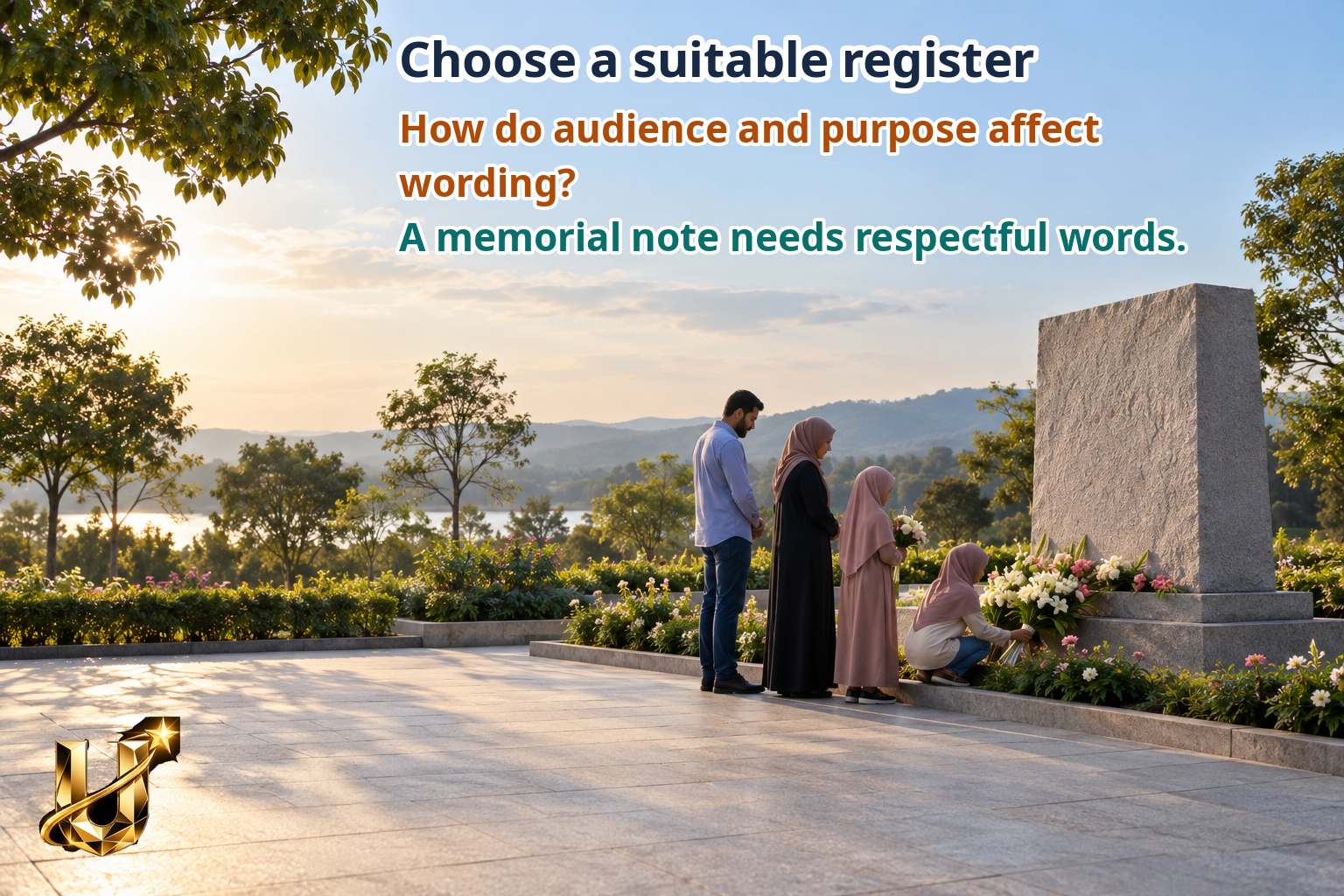
Choose a suitable register
Open National War Memorial in your student book with an adult. First use this reading explanation and application. The later original examples practise language separately. Separate original practice context: A class prepares an imagined information note about a memorial. One draft says, This place remembers those who served. Another uses joking slang. How does the audience and purpose affect the wording?
Read the book: National War Memorial
The poem honours service and sacrifice through engraved names, stone and an eternal flame. Its respectful collective voice connects a monument with remembrance. Homage means an expression of respect; etched means engraved.
Practise with the book
How does a physical detail carry meaning?
- Names identify people being remembered.
- The enduring flame suggests continuing remembrance.
Register fits purpose and audience
Register is the style of language suited to a situation. A respectful information note uses clear, considered wording. Formal does not mean complicated; familiar precise words often work better than inflated language.
Example 1: Identify purpose
The class wants to inform visitors respectfully.
- The purpose is information and remembrance.
- Choose clear, considered language.
- Avoid joking wording that conflicts with that purpose.
Respect does not replace accuracy
Names, dates, locations and inscriptions must be verified before inclusion. Our practice note supplies no exact site facts. A respectful tone cannot make an invented date true. The current official programme includes National War Memorial as its final poem. A metaphor makes a figurative identification; imagery evokes sensory impressions; repetition returns to words or phrases. Identify each device from the actual lines you read rather than assuming it must occur in every respectful note.
Example 2: Remove unsupported detail
A draft adds an exact opening date without a source.