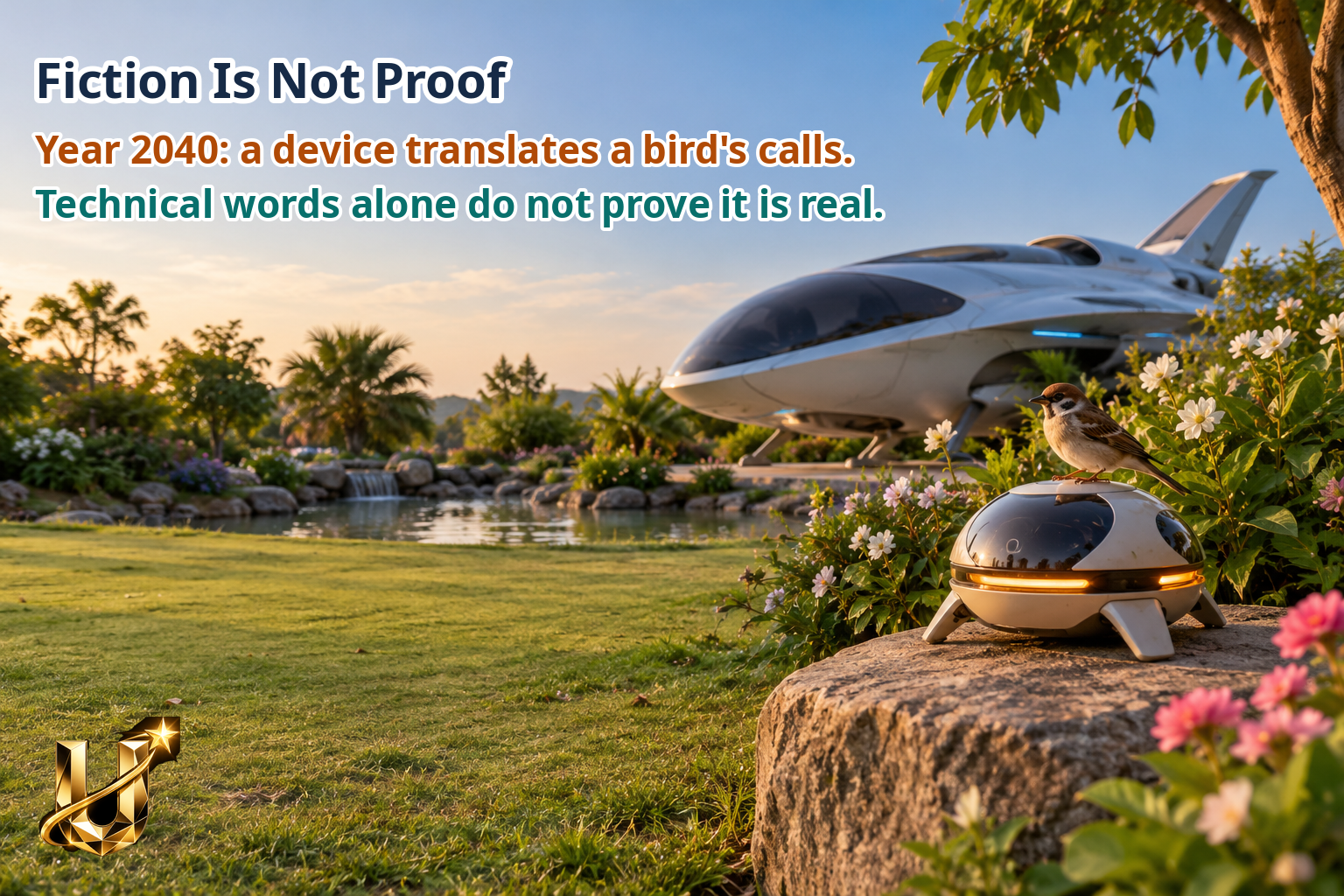
An original future scene
Open Feathered Friend in your student book with an adult. First use this reading explanation and application. The later original examples practise language separately. Separate original practice context: A fictional narrator in the year 2040 describes a spacecraft garden where a device translates a bird's calls into messages. The account uses technical-sounding words. Does that wording alone make it a verified report of a real invention?
Read the book: Feathered Friend
Arthur C. Clarke's fictional station keeps Claribel, Sven's canary. Her collapse alerts the narrator to failed air purification and an ineffective alarm system. The small hidden pet becomes vital. Sluggish means slow to respond. This is science fiction, not an actual station protocol.
Practise with the book
What reverses expectations?
- Expensive machinery fails to warn the crew.
- The overlooked bird provides the warning.
Fiction can sound precise
Science fiction may build an imagined world with technical detail and plausible explanations. A confident first-person narrator is still a created voice. Distinguish the story's internal claims from externally verified facts.
Example 1: Identify the frame
The account is explicitly fictional and set in 2040.
- Recognise the invented future setting.
- Read device descriptions as part of that world.
- Do not present them as a current product specification.
Separate internal consistency and real evidence
A device can work consistently within an invented story without being established as real technology. To discuss the text, explain what its world presents. To claim real existence, independent evidence would be needed. A quiet bird uses an adjective. Brunch blends parts of breakfast and lunch. Compare I will read tomorrow, I will be reading at noon, and By noon I will have finished. These show a future statement, an action in progress at a future point and completion before a future point.
Example 2: Explain a technique