
A question from everyday life
Enlarge image
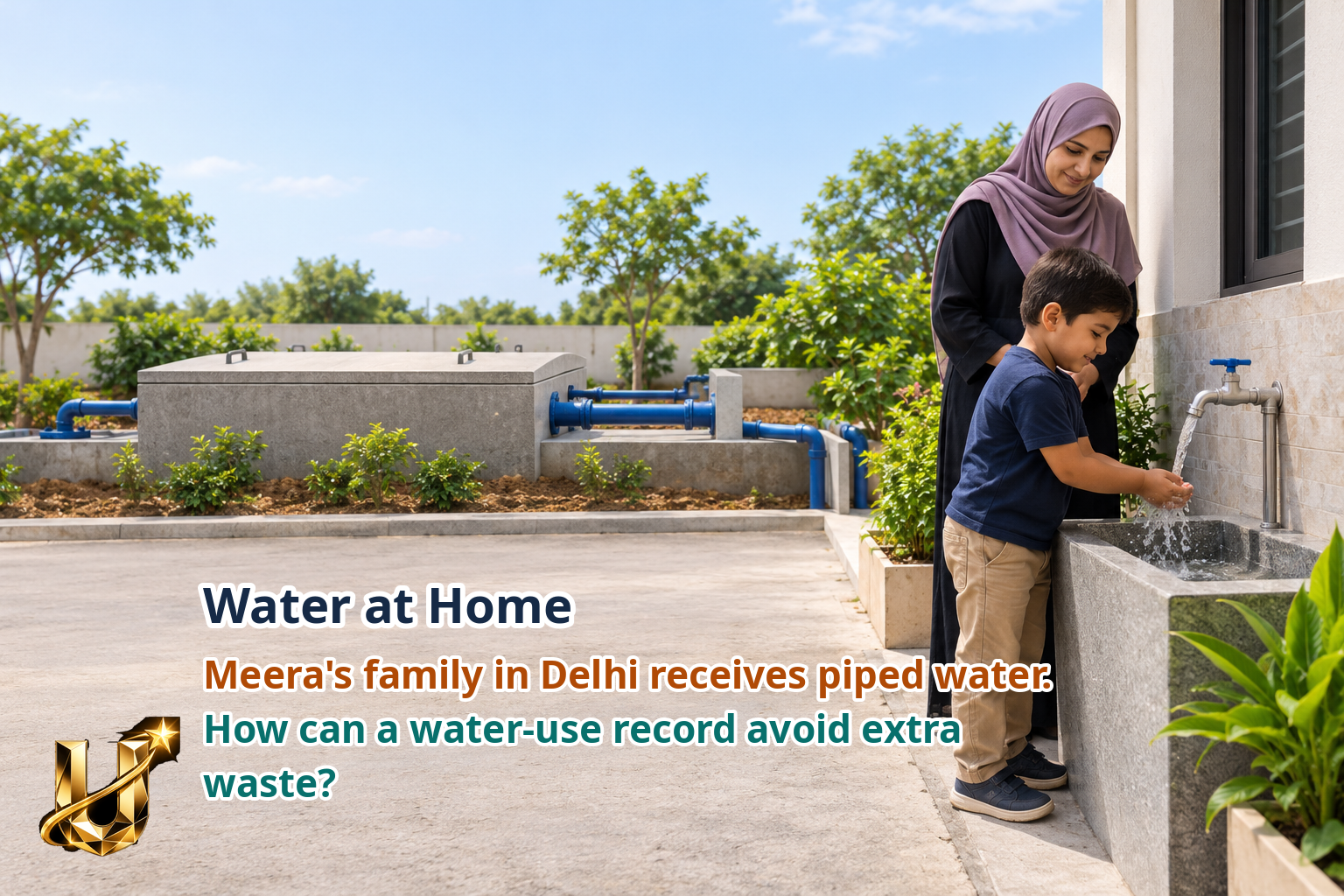
Meera's family in Delhi receives piped water, while another family collects it. How can a water-use record help without creating extra waste?
Unit 1: Life Around Us
Meera's family in Delhi receives piped water, while another family collects it. How can a water-use record help without creating extra waste?
Change of liquid into vapour from its surface.
Review lesson not available yet.
Meera's family in Delhi receives piped water, while another family collects it. How can a water-use record help without creating extra waste?
Rivers, lakes and groundwater can supply water after suitable collection and treatment. A tap delivers water rather than creating it. Access differs between places and seasons, and collecting water takes work.
A plant-watering activity uses four equal mugs one day and three later. What is the difference?
Groundwater can occupy:
Some rainwater enters spaces and cracks in soil and rock. Groundwater is not necessarily a large underground lake. Recharge can be slow or limited. Extracting water faster than it is replaced can reduce supplies.
A tap receives treated lake water. Which is the original natural source?
A tap mainly:
Compare the same activity using the same measure, such as equal-sized mugs. Reduce unnecessary waste while preserving drinking and hygiene. Clear water is not automatically safe; adults manage treatment, repairs and reuse decisions.
A tap drips after use. What can a child do?
Use a pretend record of equal mug counts. Calculate a difference and choose a waste-reducing action. Do not run extra water to collect data.
Water access and underground storage vary. Record use with clear equal measures and reduce waste without neglecting essential care.