
A question from everyday life
Enlarge image
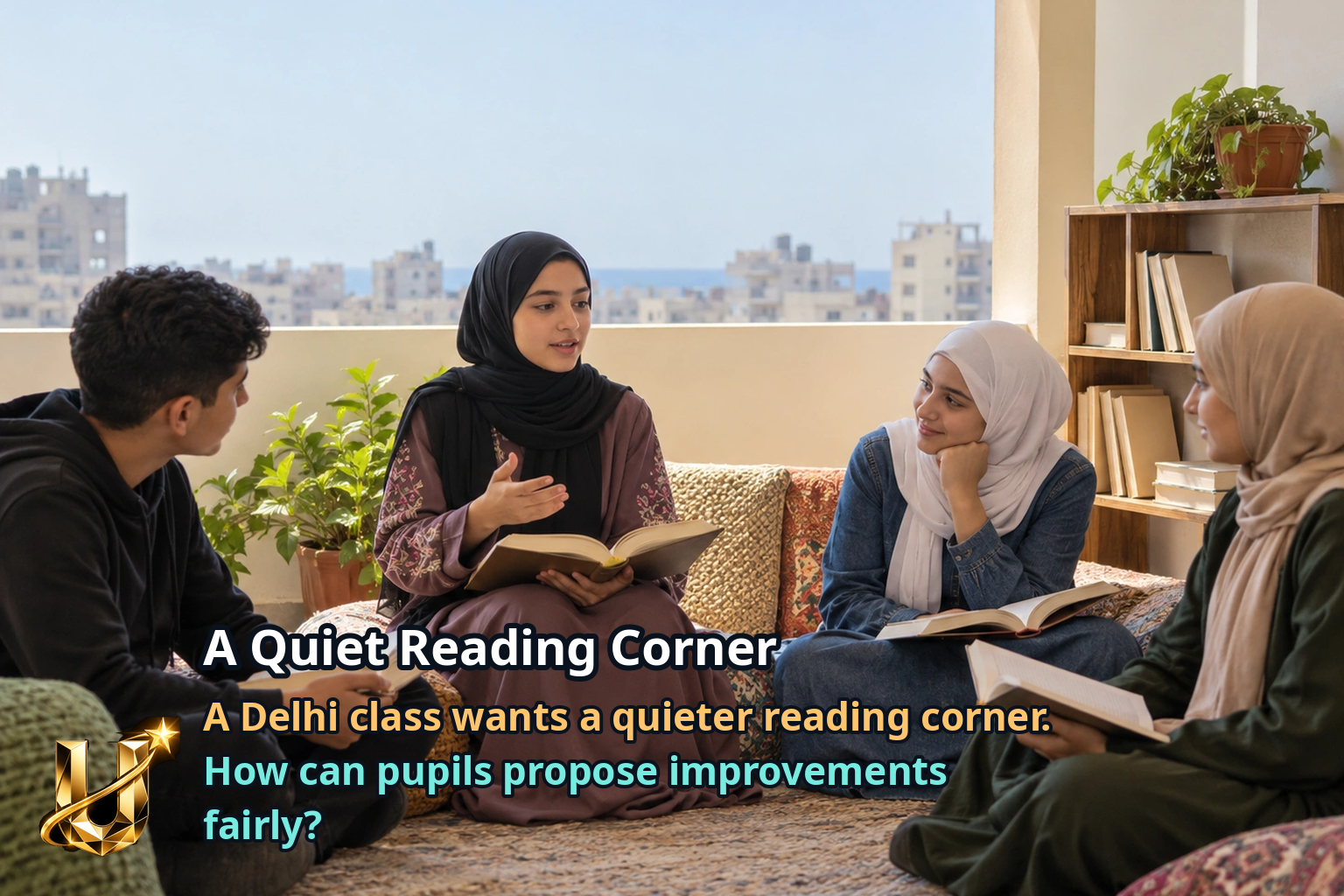
A class in Delhi wants a quieter reading corner and less wasted paper. How can pupils propose improvements fairly?
Unit 2: Health and Well-being
A class in Delhi wants a quieter reading corner and less wasted paper. How can pupils propose improvements fairly?
How easily different people can reach and use a place or service.
Review lesson not available yet.
A class in Delhi wants a quieter reading corner and less wasted paper. How can pupils propose improvements fairly?
Observe the problem without exposing private details. A count of safe paper offcuts or a description of noise during a named activity can support a request. One observation is not proof of every day's pattern.
A class counts six clean usable paper pieces after one activity. What can it claim?
One observation supports:
Name the need, proposed action, responsible adult and later check. Reuse suitable safe paper, keep routes clear and consider pupils who need quiet or different seating. Adults approve changes to rooms and equipment.
A quiet corner needs furniture moved and books labelled. What is an appropriate split?
Heavy classroom furniture should be moved by:
Children can seek trusted adults about worries or unsafe behaviour. No one must accept unwanted nonessential touch to be polite. If a first adult does not help with a safety concern, tell another. Harm is not the child's fault.
Priya raises a safety concern but is dismissed. What next?
With an adult, make a pretend proposal for a quiet reading space. Include one observation, safe roles and a later check. Use fictional concerns only.
Evidence helps school decisions. Practical plans name roles and follow-up, while trusted support and personal boundaries protect pupils.