
A question from life
Enlarge image
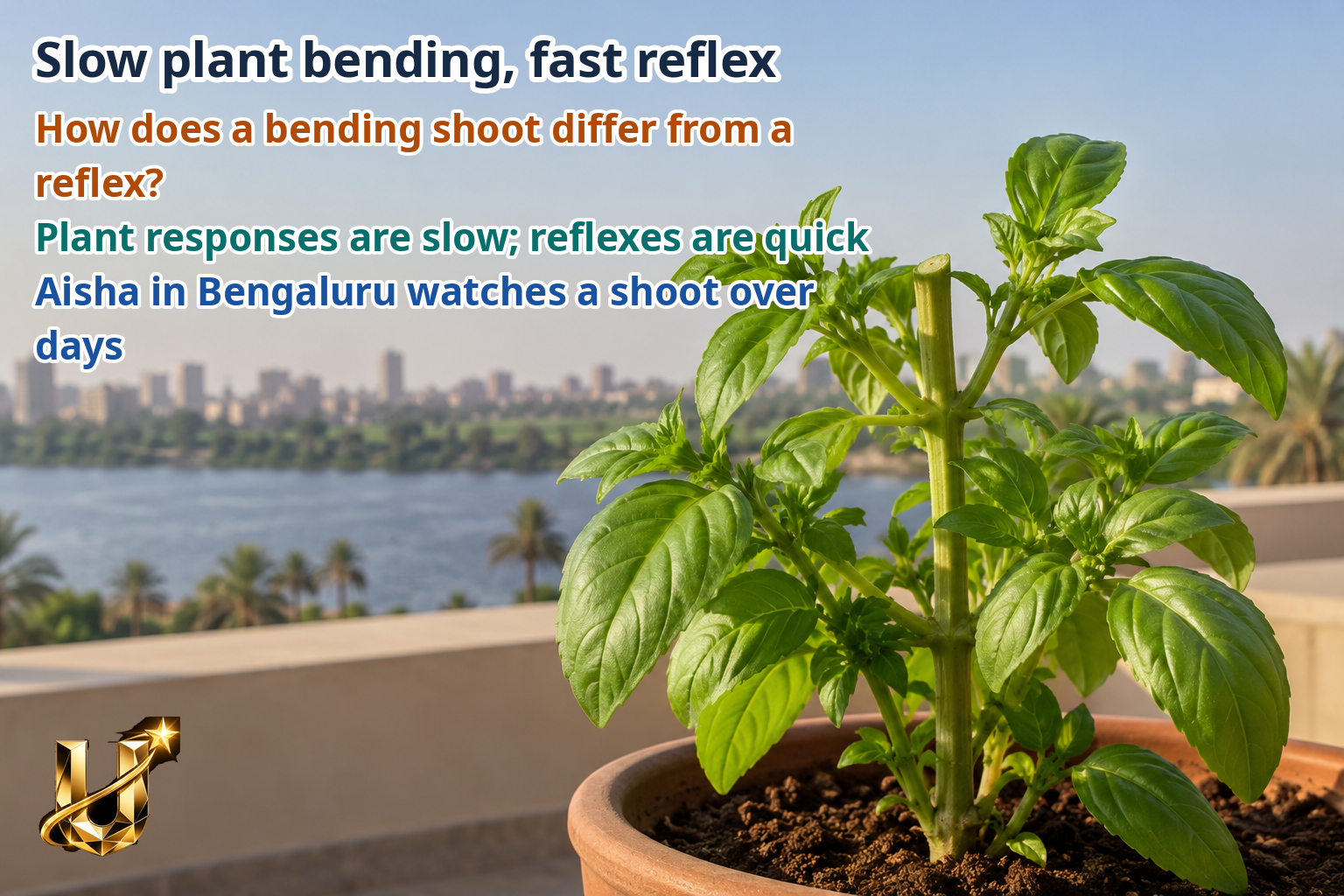
Aisha in Bengaluru observes a shoot bending toward a window over several days. How does this differ from quickly pulling a hand away from danger?
Working review group 3; official unit label pending
Aisha in Bengaluru observes a shoot bending toward a window over several days. How does this differ from quickly pulling a hand away from danger?
A specialised structure or molecule that detects a stimulus or signal.
Review lesson not available yet.
Aisha in Bengaluru observes a shoot bending toward a window over several days. How does this differ from quickly pulling a hand away from danger?
Endocrine glands release hormones into blood, affecting cells with suitable receptors. Hormonal signals commonly have different timing and duration from fast nerve signals. The nervous and endocrine systems interact; no single gland independently controls every process.
A hormone circulates past many cells.
How do endocrine hormones commonly travel to targets?
Insulin and glucagon help regulate blood glucose through coordinated feedback. Thyroid hormones influence metabolism and adrenal hormones contribute to stress responses. A body measurement or outward appearance alone cannot diagnose a hormone disorder.
A model shows glucose rising, insulin signalling increasing and glucose later moving toward its usual range.
What makes a cell an appropriate hormone target?
Plant hormones coordinate growth and responses. In a usual shoot model, unequal auxin-related growth can bend the shoot toward light. Roots and shoots also respond to gravity; responses vary by tissue and conditions. Gibberellins, cytokinins, abscisic acid and ethylene have other roles in growth, water stress or ripening.
A prepared shoot record shows greater elongation on its shaded side.
Compare a rapid nerve response and a slow recorded plant growth response. Interpret a feedback diagram and plant-hormone cards without applying chemicals or sharing personal health data.
Hormones act through suitable targets and feedback. Plants coordinate responses through chemical signals and differential growth, without animal-style nervous circuits.