
A question from life
Enlarge image
Kabir in Bhopal compares a new plant from a potato tuber with a new plant from a flower's seed. How do the reproductive routes differ?
Working review group 4; official unit label pending
Kabir in Bhopal compares a new plant from a potato tuber with a new plant from a flower's seed. How do the reproductive routes differ?
A reproductive cell that can fuse with another in sexual reproduction.
Review lesson not available yet.
Kabir in Bhopal compares a new plant from a potato tuber with a new plant from a flower's seed. How do the reproductive routes differ?
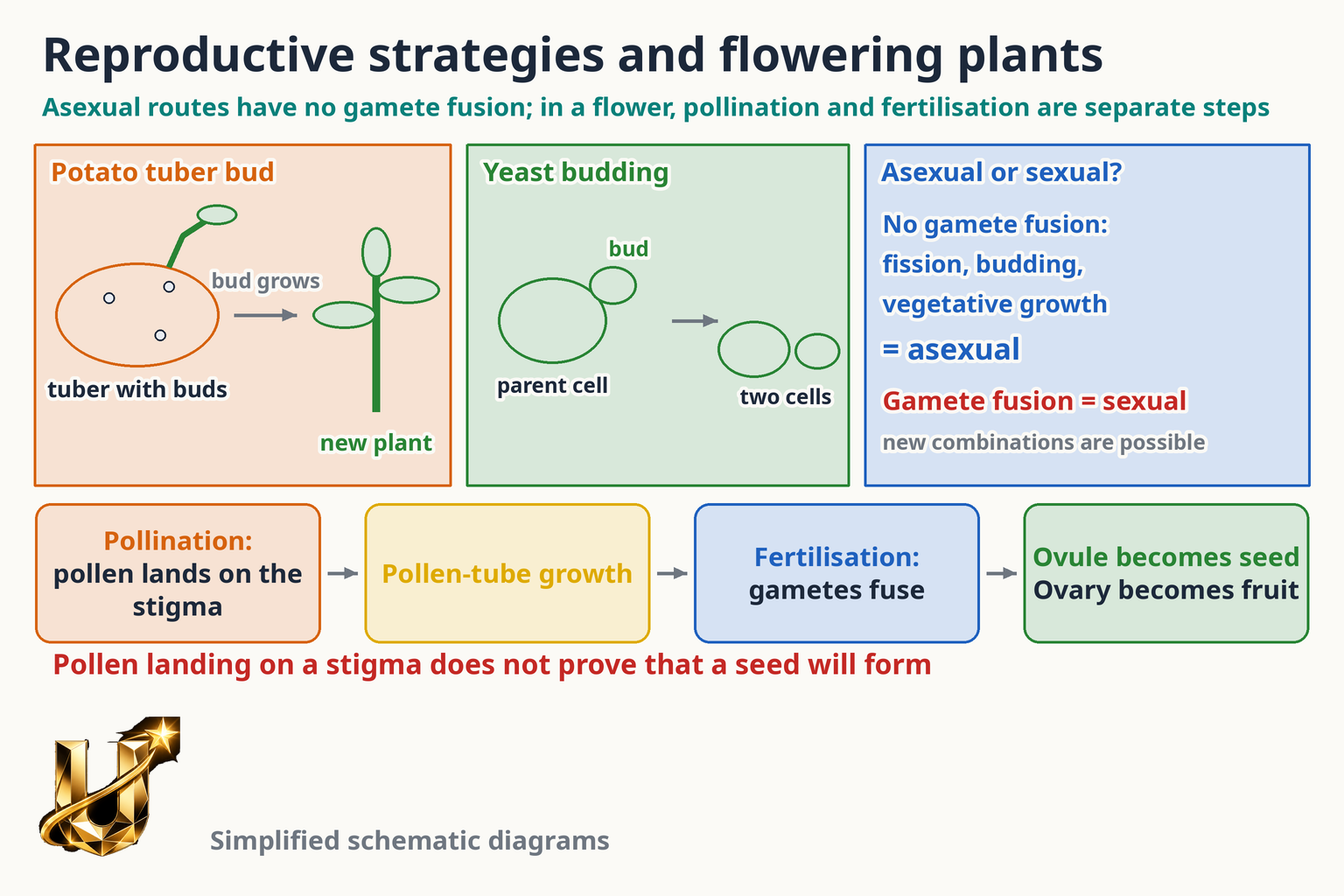
Reproduction creates new organisms. Asexual methods do not involve gamete fusion and include fission, budding and suitable vegetative growth. Sexual reproduction involves gamete fusion and can combine inherited information. Growth or repair alone is not always reproduction.
A potato tuber's bud develops into a separate plant.
What defines sexual reproduction here?
A tuber bud or suitable cutting can form a new plant in some species. Asexual offspring are often very similar genetically, but mutations can occur. Sexual offspring commonly have new combinations; neither method guarantees survival under every condition.
Pollen lands on a compatible stigma.
Which is asexual?
Anthers produce pollen and a stigma receives it. Pollination transfers pollen, while fertilisation fuses gametes after suitable pollen-tube growth. A fertilised ovule usually becomes a seed and the ovary usually contributes the fruit. Self-pollination is possible; separate parent plants are not always required.
A supplied sequence shows a fertilised ovule developing.
Arrange prepared cards for tuber growth and flower-to-seed development. Mark where gamete fusion occurs and where it does not. No plant cutting or microbial cultures.
Asexual and sexual routes differ in gamete fusion. Pollination transfers pollen; fertilisation and later development form seeds and fruits in flowering plants.