
A question from everyday life
Enlarge image
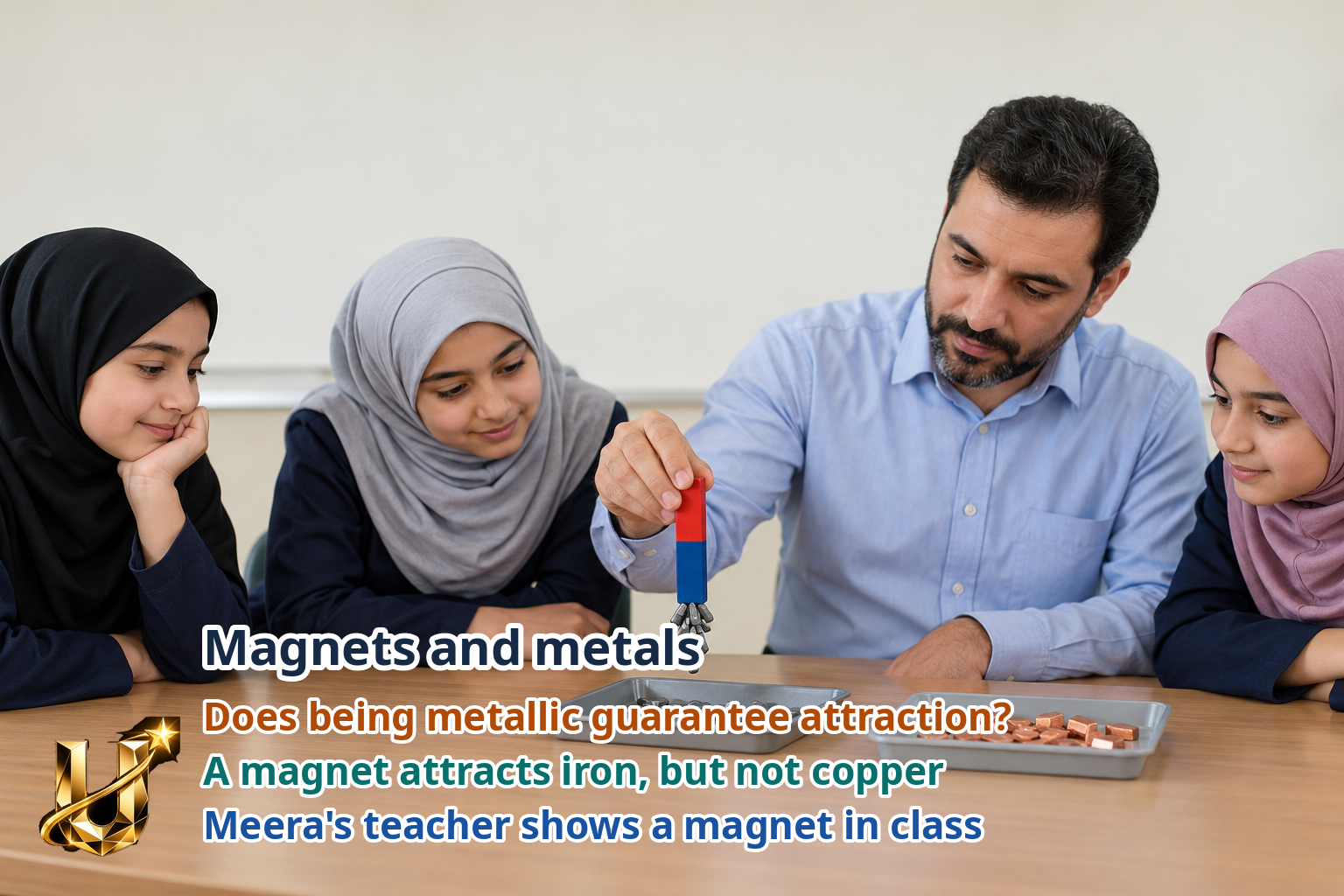
Meera's classroom magnet attracts an iron clip but not a copper object. Does being shiny or metallic guarantee attraction?
Working review group 2; official unit label pending
Meera's classroom magnet attracts an iron clip but not a copper object. Does being shiny or metallic guarantee attraction?
A north or south region used to describe a magnet’s directional interactions.
Review lesson not available yet.
Meera's classroom magnet attracts an iron clip but not a copper object. Does being shiny or metallic guarantee attraction?
Ordinary magnets strongly attract certain materials such as iron. They do not attract all metals equally. Appearance alone does not establish magnetic behaviour. Use safe adult-approved objects.
A shiny copper piece is not attracted, while an iron clip is. What can be concluded?
Ordinary magnets attract:
A bar magnet has north and south poles. In ordinary school examples, effects are often stronger near its ends. Like poles repel; unlike poles attract. Attraction to a magnet alone does not prove an object is itself a magnet.
The north end of one magnet faces another north end. What is expected?
North facing north usually:
Keep the magnet, gap and object arrangement comparable when comparing materials. Use teacher-managed magnets and avoid loose small magnets, electronics and other unsuitable items. Do not break or cut magnets to investigate poles.
An iron piece is attracted to a bar magnet. Is the piece proved to be a permanent magnet?
Use an adult-managed enclosed demonstration or interaction cards. Predict one pole interaction and explain why shine alone is not evidence.
Magnets interact differently with materials. Like poles repel, unlike poles attract, and tests need controlled safe conditions.