
A question from everyday life
Enlarge image
Meera reads prepared results where a metal strip completes a lamp circuit but a plastic strip does not. Can shine alone decide every material's electrical behaviour?
Working review group 2; official unit label pending
Meera reads prepared results where a metal strip completes a lamp circuit but a plastic strip does not. Can shine alone decide every material's electrical behaviour?
A connected path through suitable components between source terminals.
Review lesson not available yet.
Meera reads prepared results where a metal strip completes a lamp circuit but a plastic strip does not. Can shine alone decide every material's electrical behaviour?
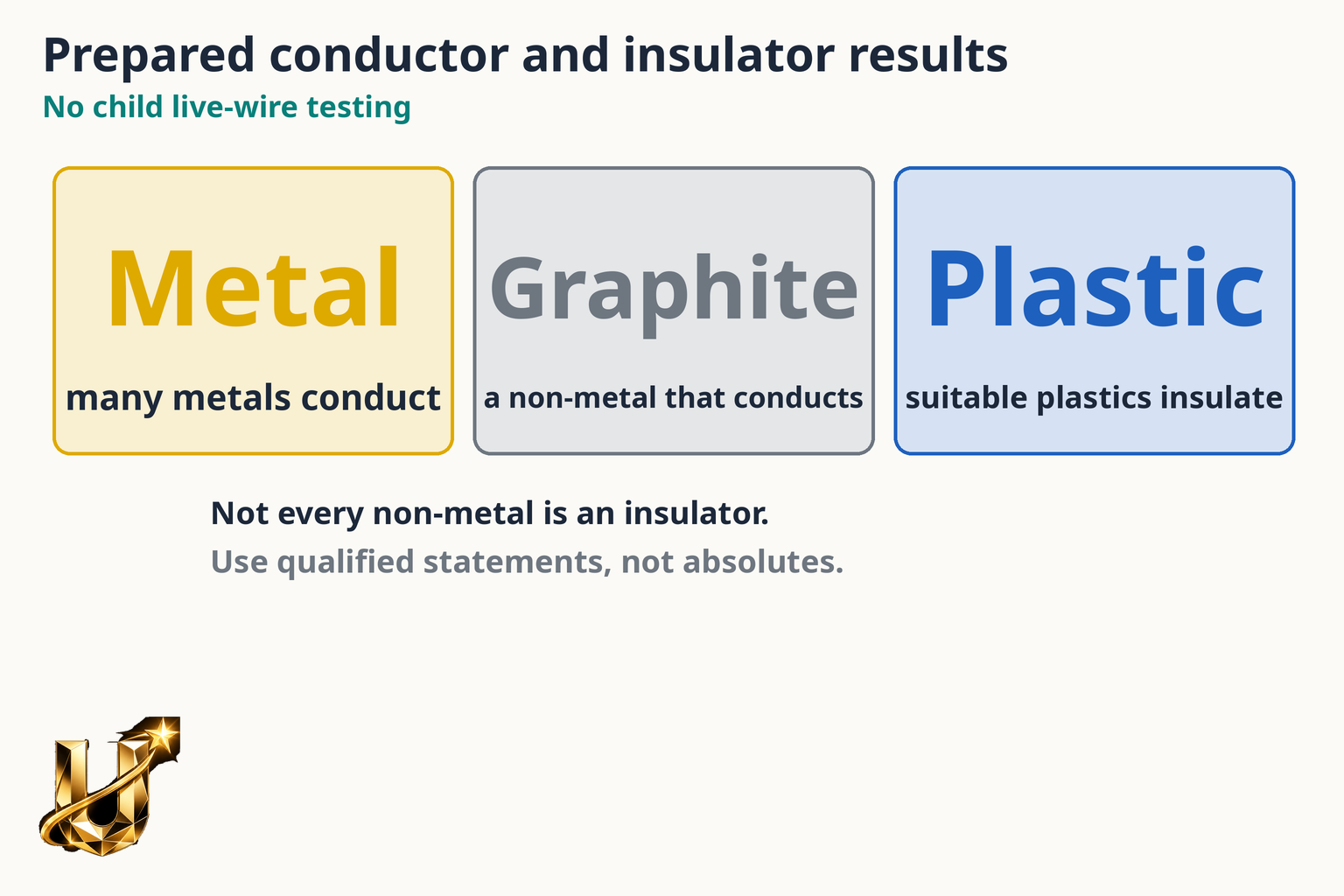
Conductors allow current relatively easily under stated conditions; insulators strongly limit it. Many metals conduct, while suitable plastics are used as insulation. Not every non-metal is an insulator: graphite is an important school example.
The same approved reference circuit works with one strip but not another. What can be stated?
A conductor allows:
A diagram must show correct connections and component symbols. Some components, such as LEDs, require correct polarity and suitable current-limiting arrangements. Use prepared results rather than trial-and-error battery combinations.
Aarav says every non-metal blocks current. What example limits that claim?
A school non-metal conductor example is:
Troubleshooting should compare a known working reference and one safe changed factor. A lamp not glowing does not prove the tested material alone is the cause. The cell, contacts and component can also matter. Adults manage equipment faults.
A circuit does not glow after several components were changed. Can the last material be blamed alone?
Read three prepared circuit-result cards. Identify a conductor example, an alternative fault and a condition to keep similar.
Material behaviour needs appropriate tests. Exceptions, polarity and circuit faults require careful interpretation and safe equipment.