
A question from life
Enlarge image
Enlarge image
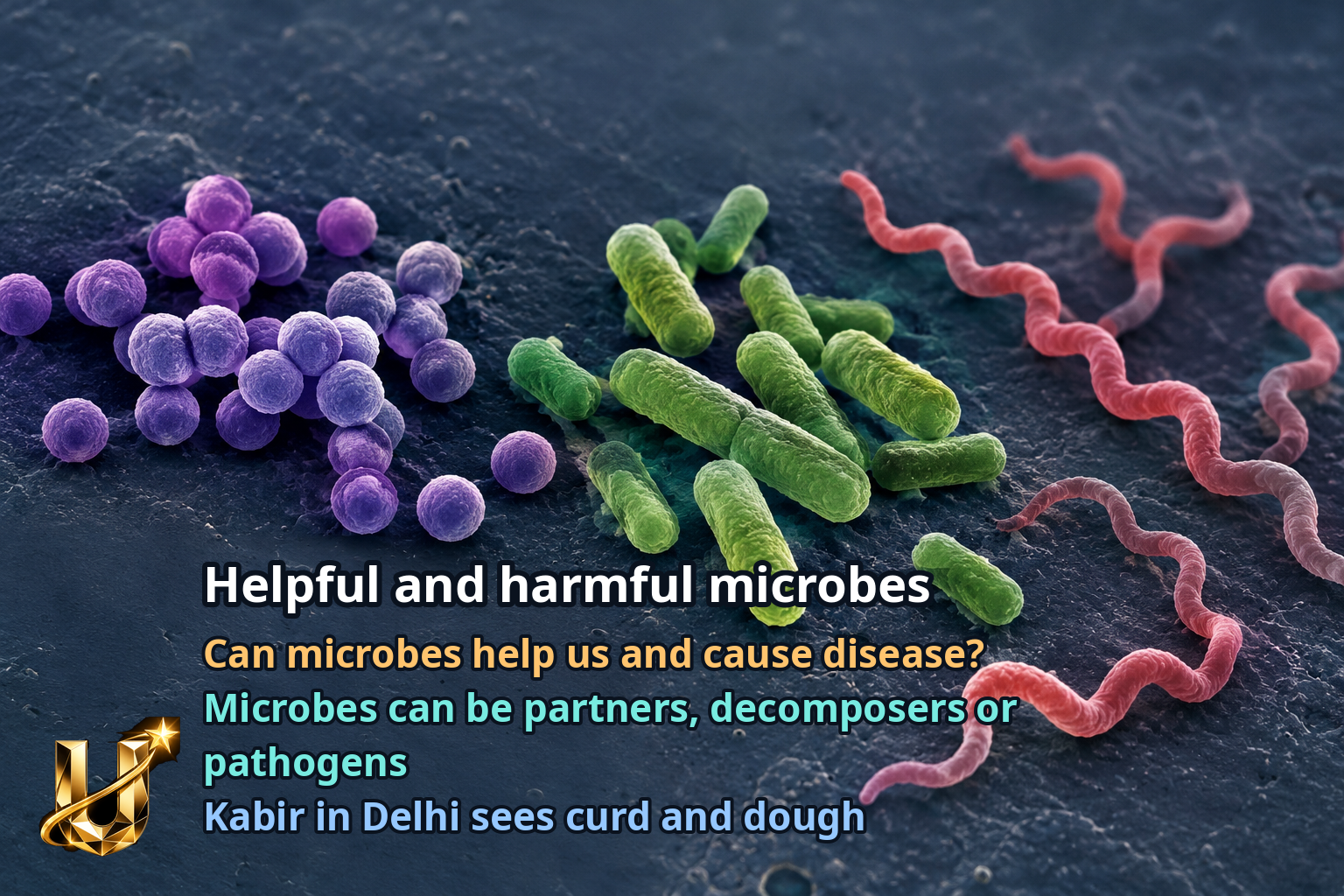
Kabir in Delhi sees curd setting and bread dough rising. How can microscopic organisms help us even though some microbes cause disease?
Working review group 1; official unit label pending
Kabir in Delhi sees curd setting and bread dough rising. How can microscopic organisms help us even though some microbes cause disease?
The smallest unit able to carry out the basic activities of life, either as an organism or as part of one.
Review lesson not available yet.
Kabir in Delhi sees curd setting and bread dough rising. How can microscopic organisms help us even though some microbes cause disease?
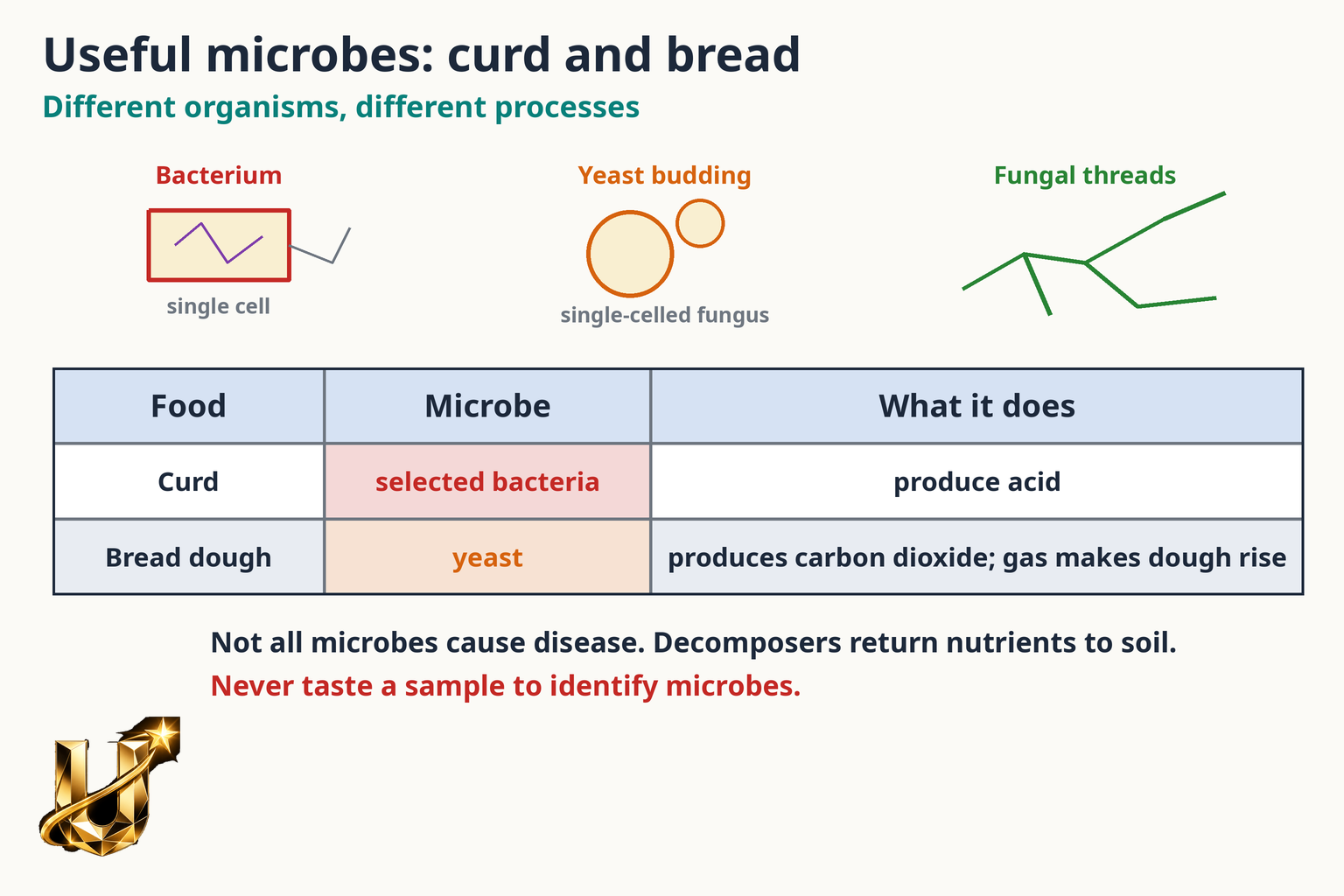
Microorganisms include bacteria, many fungi and some protists and algae. Yeast is a single-celled fungus. Viruses are studied with microbes but are not cells and multiply only within host cells. Not all microbes cause disease.
Aisha compares curd making and yeast-raised bread.
Which statement is correct?
Certain bacteria help turn milk into curd by producing acid. Yeast uses sugars and releases carbon dioxide during fermentation; gas can make dough rise. These are different processes involving different organisms.
A prepared yeast comparison shows bubbles with sugar but few without it.
What mainly makes yeast dough rise?
Many bacteria and fungi break down dead matter, helping nutrients return to the environment. Some microbes spoil food or are pathogens. Appearance or smell alone cannot establish whether food or water is safe; never taste a sample to identify microbes.
Fallen leaves break down in a moist school garden.
Sort teacher-provided picture cards into useful microbial processes, decomposition and possible harm. Explain why 'microbe' does not mean 'disease'. Use pictures only, not food tasting or cultures.
Microbes are diverse. Selected bacteria make curd, yeast can raise dough, decomposers recycle nutrients, and some microbes cause disease.