
A question from everyday life
Enlarge image
Enlarge image
Meera compares a cotton shirt, a woollen scarf and a manufactured-fibre bag in Jaipur. Are all fabrics made in the same way or suited to the same purpose?
Unit 4: Things Around Us
Meera compares a cotton shirt, a woollen scarf and a manufactured-fibre bag in Jaipur. Are all fabrics made in the same way or suited to the same purpose?
A thin strand used to make yarn or other textile structures.
Review lesson not available yet.
Meera compares a cotton shirt, a woollen scarf and a manufactured-fibre bag in Jaipur. Are all fabrics made in the same way or suited to the same purpose?
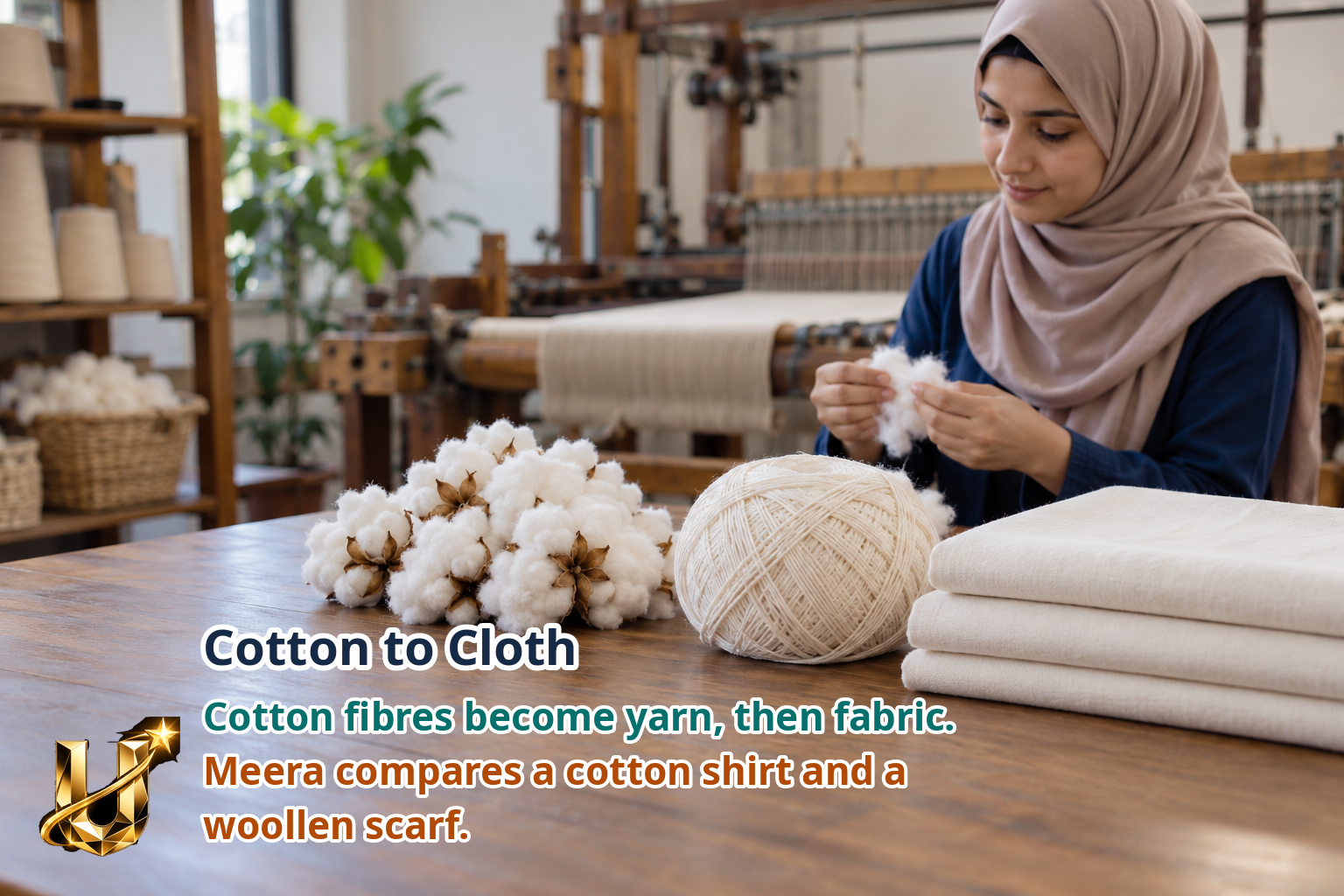
Fibres are thin strands that can be made into yarn. Yarn can be woven or knitted into fabric. Weaving interlaces sets of yarn; knitting forms linked loops. Some fabrics use other processes, so this is not a rule for every textile.
Aarav asks where cotton fibre begins. What can he say?
Cotton fibre comes from:
Cotton fibres come from cotton plants. Wool commonly comes from sheep and some other animals. Manufactured fibres are made through industrial processes. The source alone does not establish every property or environmental effect.
One diagram shows crossing yarns and another shows linked loops. Which suggests knitting?
Knitting commonly forms:
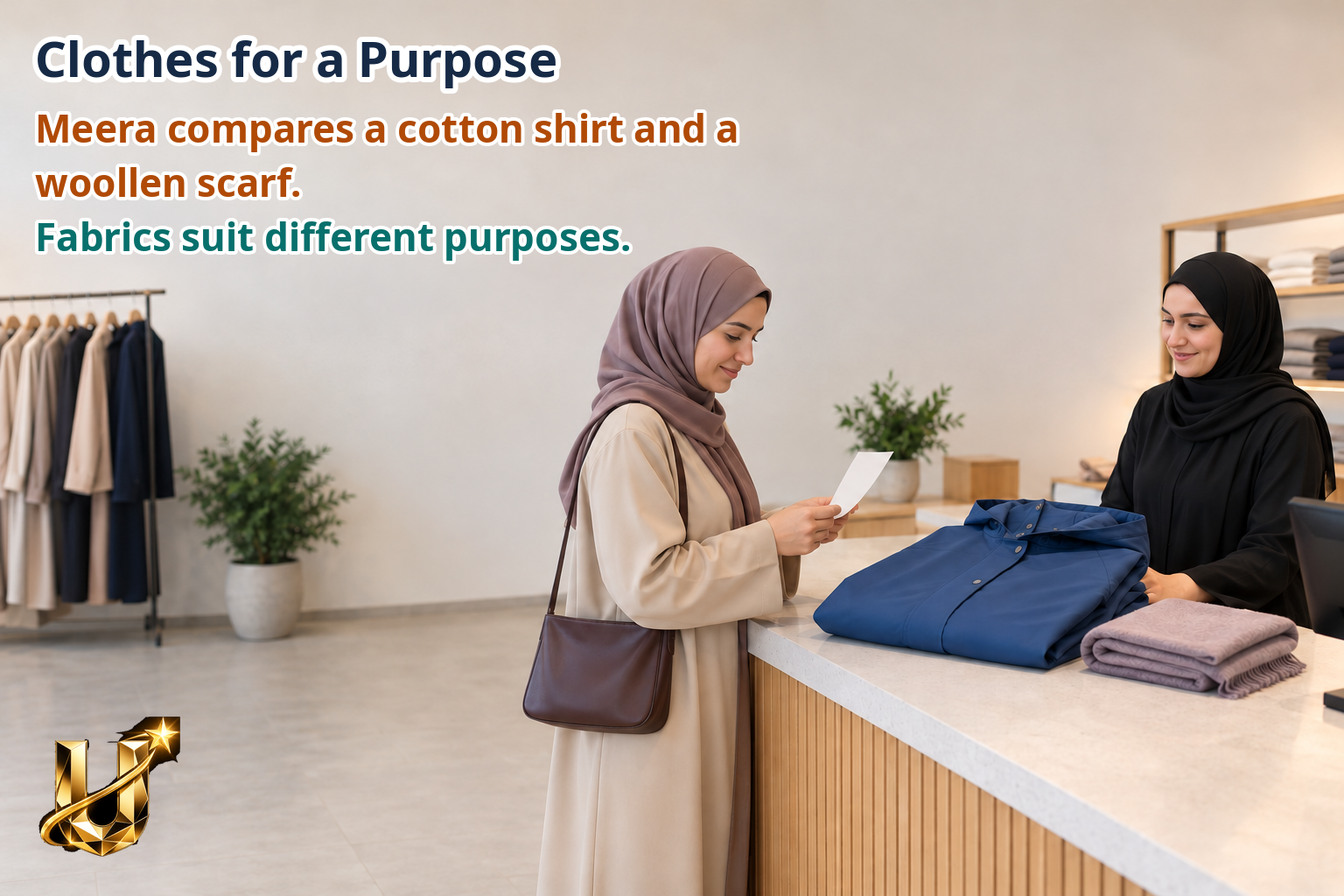
Clothing choices reflect weather, work, comfort, culture, access and personal preference. Materials differ in warmth, drying, absorbency and durability. Respect people's choices; a garment does not reveal their whole identity.
A family prepares for cold weather. Why consider a garment's warmth rather than only colour?
Use approved fabric pictures or safe clean samples. Identify a known source and compare a visible structure without burning, cutting or tasting.
Textiles connect fibres, yarn and fabric through different processes. Purpose and varied needs guide clothing choices.