
A question from everyday life
Enlarge image
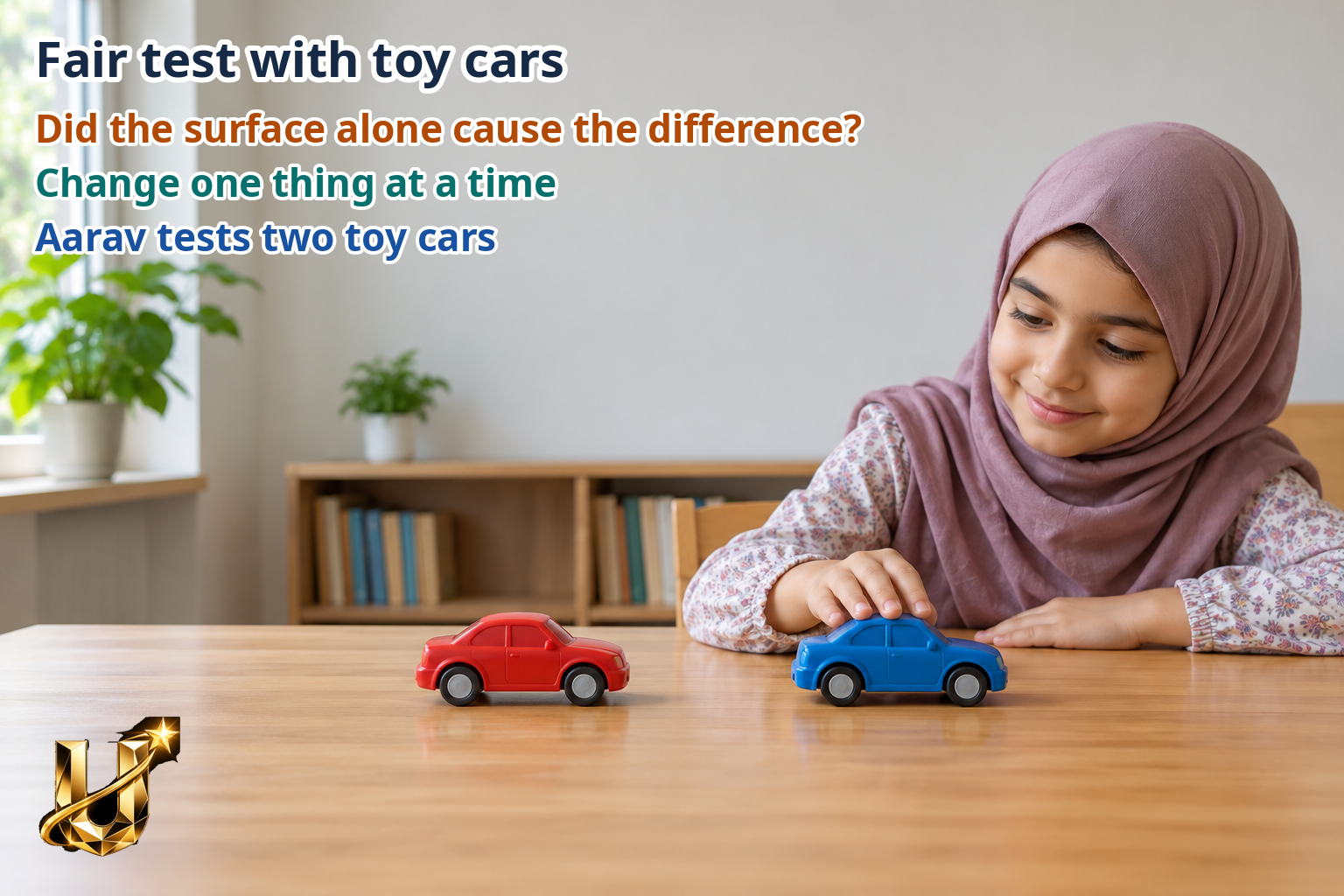
Aarav tests two toy cars on different slopes and different surfaces. Can he conclude that the surface alone caused the different travel?
Working review group 1; official unit label pending
Aarav tests two toy cars on different slopes and different surfaces. Can he conclude that the surface alone caused the different travel?
What is noticed or measured.
Review lesson not available yet.
Aarav tests two toy cars on different slopes and different surfaces. Can he conclude that the surface alone caused the different travel?
A fair comparison changes one selected factor while keeping other relevant conditions similar. Name what is changed, measured and kept similar. Some conditions are hard to control, and their limits should be stated.
Both car mass and slope differ between two trials. What prevents a surface-only conclusion?
A fair comparison aims to:
Repeated trials can reveal variation. Use consistent units and record actual observations, including unusual results. Repeats do not make every conclusion automatically correct.
Three stated travel lengths are 10, 12 and 14 centimetres. What is their mean?
The mean of 10, 12 and 14 centimetres is:
A small sample supports a limited claim. Distinguish a pattern from proof of its cause. A model represents selected features and may simplify scale or conditions. Never invent data to make a model look perfect.
Hand pushes differ slightly. What should the record say?
Use the invented 10, 12 and 14 centimetre record. Calculate the mean and name one condition to keep similar in a toy comparison.
Fair comparisons, repeats and consistent units support reasoning. Honest limits keep conclusions proportional to evidence.